
1. What Is a Residential Proxy?
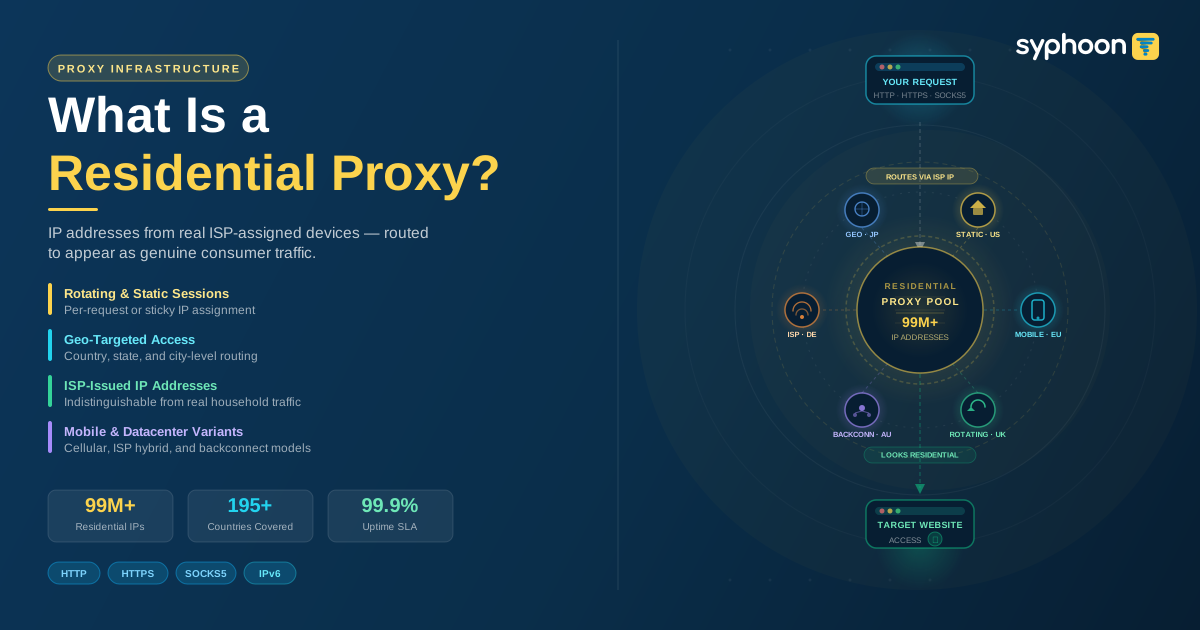
A residential proxy is an intermediary server that uses an IP address assigned by an Internet Service Provider (ISP) to a homeowner. Unlike datacenter proxies, which come from secondary subnets, residential proxies are associated with real physical locations and legitimate service providers, making them appear as genuine user traffic to target websites.
2. How Residential Proxies Work
When you use a residential proxy, your request is routed through the proxy provider's network to a residential device (the "peer"). The peer then forwards your request to the destination website. The website sees the request as coming from a standard home connection, effectively masking your actual IP address and location.
3. Types of Residential Proxies
Rotating Residential Proxies
These proxies automatically change the IP address for every new request or after a set period. This is ideal for large-scale web scraping as it prevents rate limiting and IP bans.
Static (Sticky) Residential Proxies
These provide a single IP address for a longer duration, often ranging from 1 minute to 24 hours. They are useful for tasks requiring a consistent session, such as managing social media accounts or accessing geo-restricted content that requires a login.
ISP Proxies (Residential on Datacenter Infrastructure)
ISP proxies are a hybrid model. They use IP addresses assigned by ISPs but are hosted on datacenter servers. This combines the speed and reliability of datacenter proxies with the high trust score of residential IPs.
Mobile Residential Proxies
These use IP addresses assigned by mobile carriers (e.g., AT&T, Verizon) to mobile devices. They have the highest trust score but are often the most expensive due to their limited availability and high demand.
4. Backconnect Gateway Model
Most residential proxy providers use a backconnect gateway. Instead of connecting directly to thousands of individual residential IPs, you connect to a single endpoint (gateway). The gateway then automatically routes your requests to the appropriate residential IP in the provider's pool, handling rotation and session management on the backend.
5. Residential vs Datacenter Proxies
Datacenter proxies are faster and cheaper but easier to detect. Residential proxies are slower and more expensive but offer much higher anonymity and are significantly harder to block.
6. Residential Proxies vs ISP Proxies
While both use ISP-assigned IPs, residential proxies are hosted on actual consumer devices (laptops, desktops, IoT), while ISP proxies are hosted in datacenters. Residential proxies offer better geo-diversity, while ISP proxies offer better speed.
7. Supported Protocols
Most residential proxies support HTTP, HTTPS, and SOCKS5 protocols, ensuring compatibility with a wide range of software and scripts.
8. Common Use Cases for Residential Proxies
- Web Scraping: Gathering data from protected websites.
- Ad Verification: Checking how ads appear in different regions.
- SEO Monitoring: Tracking search engine results from specific locations.
- Market Research: Accessing localized pricing and product information.
- Social Media Management: Managing multiple accounts without triggering security alerts.
9. Geo-Targeting Capabilities
One of the primary advantages of residential proxies is the ability to target specific countries, cities, or even ZIP codes. This is crucial for localized data collection and testing.
10. Legal and Ethical Considerations
Using residential proxies is generally legal, but it’s important to use them ethically and in compliance with the terms of service of the target websites. Ensure your proxy provider sources their IPs through consensual peer-to-peer networks.
11. Limitations and Operational Considerations
- Cost: Residential proxies are more expensive than datacenter alternatives.
- Speed: Latency can be higher due to the hops between the proxy server and the residential peer.
- Reliability: Individual residential IPs can go offline if the peer device is turned off.
12. Residential Proxies in Modern Web Data Infrastructure
Residential proxies are no longer just for bypassing filters; they are a critical component of professional web data extraction and monitoring strategies, providing the trust level required to access today's highly protected web environments.
Scale Your Data Extraction with Syphoon Residential Proxies
Access web data globally using high-trust residential IPs designed for reliable data collection across regions and platforms.
Join our Discord server
Connect with our team, discuss your use case, ask technical questions, and share feedback with a community of people working on similar problems.