Naver Scraper API for Shopping and Product Data
Collect structured Naver Shopping data including product listings, prices, seller details, reviews, rankings, and search results. Syphoon handles anti-bot blocks, proxies, and parsing so your team gets clean API-ready data.
- Real-time Naver Data
- 5 Dedicated Endpoints
- 99.99% Success Rate
- Korean IP Routing
- CAPTCHA Handled
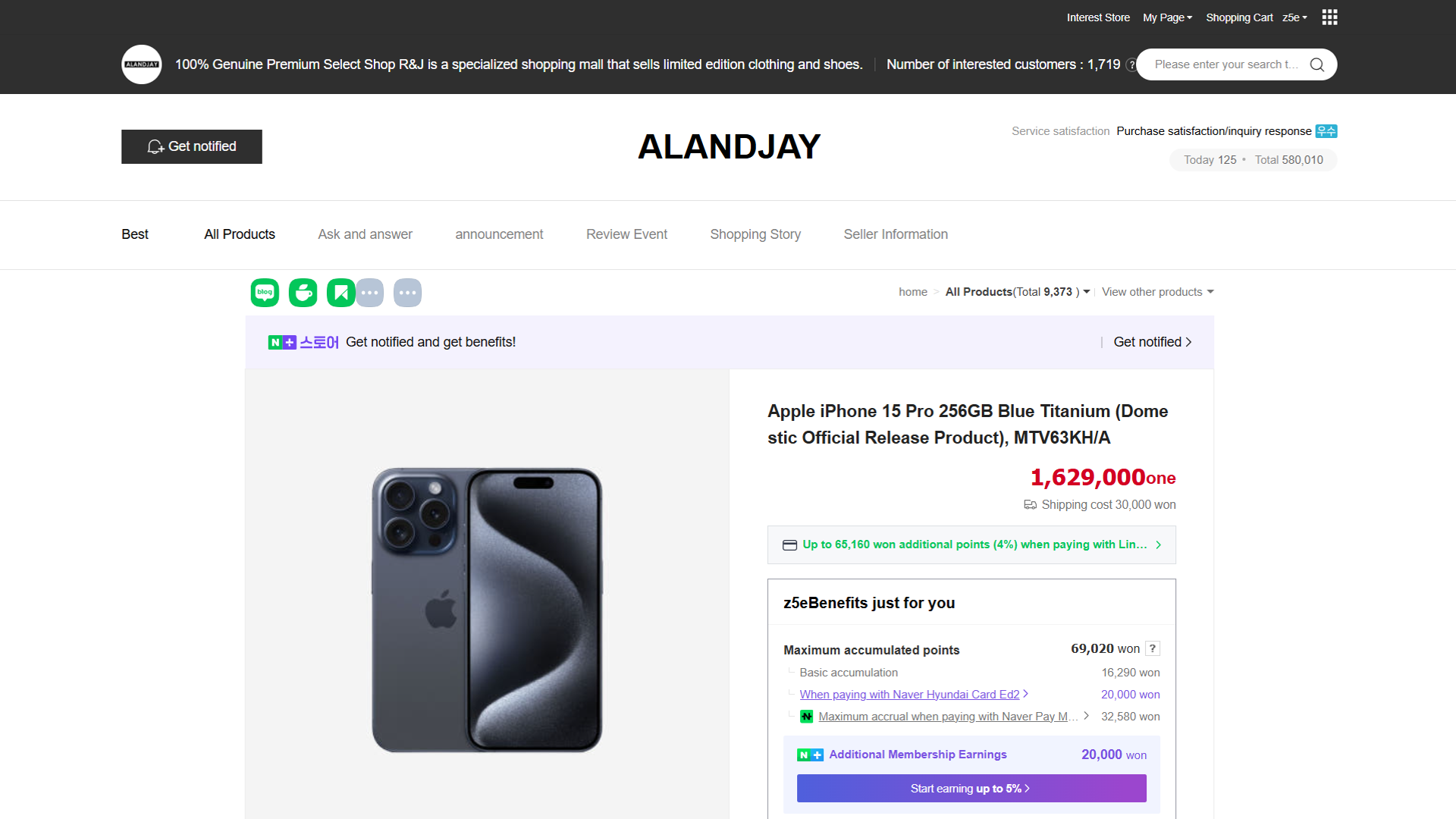
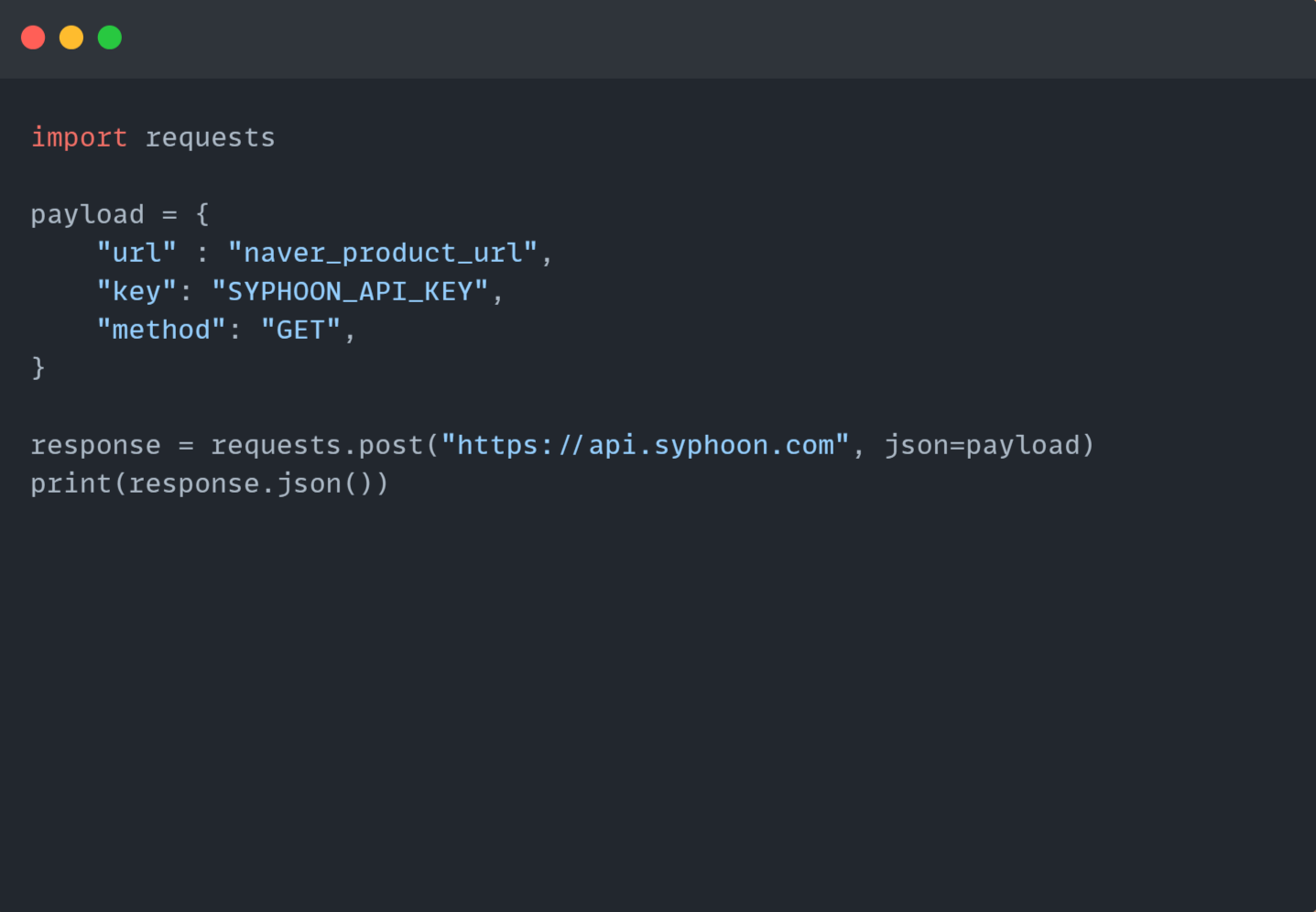
Naver Data API sample code
An easy way to fetch and handle data using our API

Advanced Features & Benefits
Data Extraction
Retrieve detailed product listings, shopping search results, pricing, benefit structures, and seller data from Naver Shopping — structured and delivery-ready.
Structured JSON Output
Clean, consistently structured JSON responses across all five endpoints. Drop directly into analytics pipelines, ERP systems, or data warehouses without custom parsing.
Scalability
Handles large request volumes efficiently — from small-scale product monitoring to enterprise-level market intelligence pipelines processing millions of records monthly.
CAPTCHA & Anti-Bot Handling
Naver's bot detection and CAPTCHA systems are handled automatically. No proxies to manage, no solvers to integrate — reliable extraction at any volume.
Korean IP Routing
All requests are routed through Korean IPs, delivering authentic local data including region-locked prices, inventory status, and localised search rankings — exactly as a real Korean user would see them.
Real-Time Data Retrieval
Live data pulled directly from Naver's servers on every request. Always-fresh product prices, stock status, search rankings, and benefit structures — no caching lag.
Naver Data API Pricing
✔
Fast & Reliable✔
Complete Data Collection Solution✔
Fast OnboardingHobby
Free
- ✔100 requests per month
Starter
$58
- ✔25K requests per month
- ✔$2.32 per 1K requests
Regular
$100
- ✔50K requests per month
- ✔$2.00 per 1K requests
Premium
$225
- ✔250K requests per month
- ✔$0.90 per 1K requests
Naver Data API FAQs
Naver Scraping & Market Insights
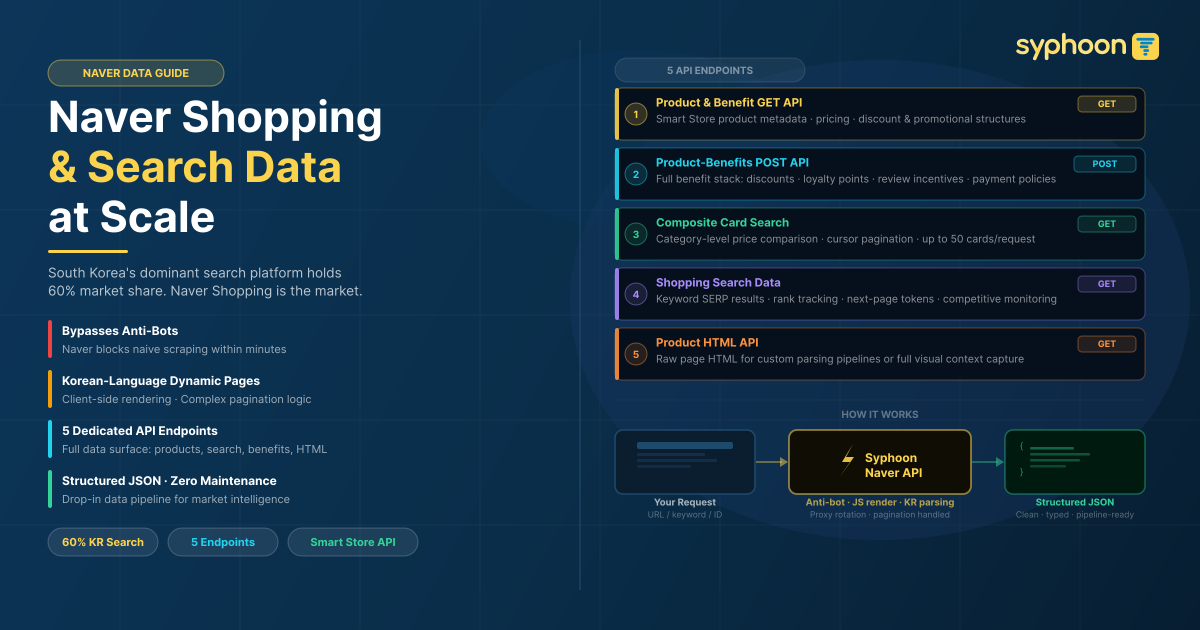
Naver Shopping and Search Data: How to Access It at Scale (2026)
A complete guide to Naver Shopping and Search data, what it covers, why it's hard to access, and how market intelligence and e-commerce teams extract it at scale using an API.
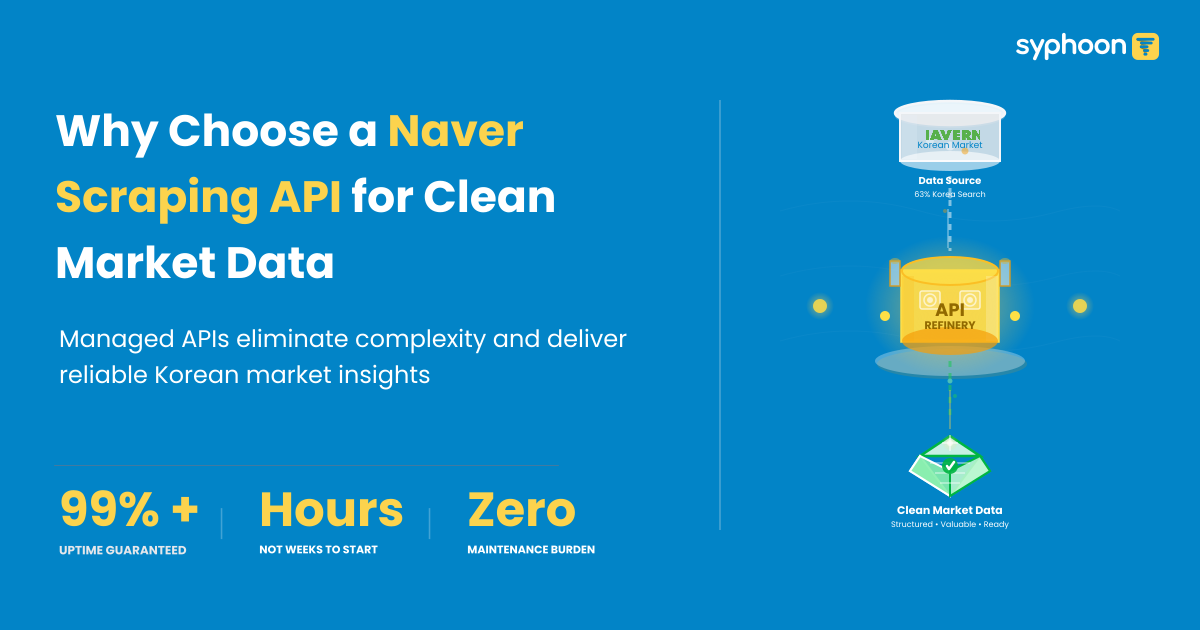
Why Choose a Naver Scraping API for Your Data Extraction Needs
If you're pulling in Korean market data, then you know how important Naver is. More than 63% of all search queries in Korea flow through Naver, making it an invaluable resource for businesses trying to understand consumers in Korea. Scraping Naver is not easy, though, because the platform has strong anti-bot protection and serves content dynamically, frustrating anyone using basic scripts.
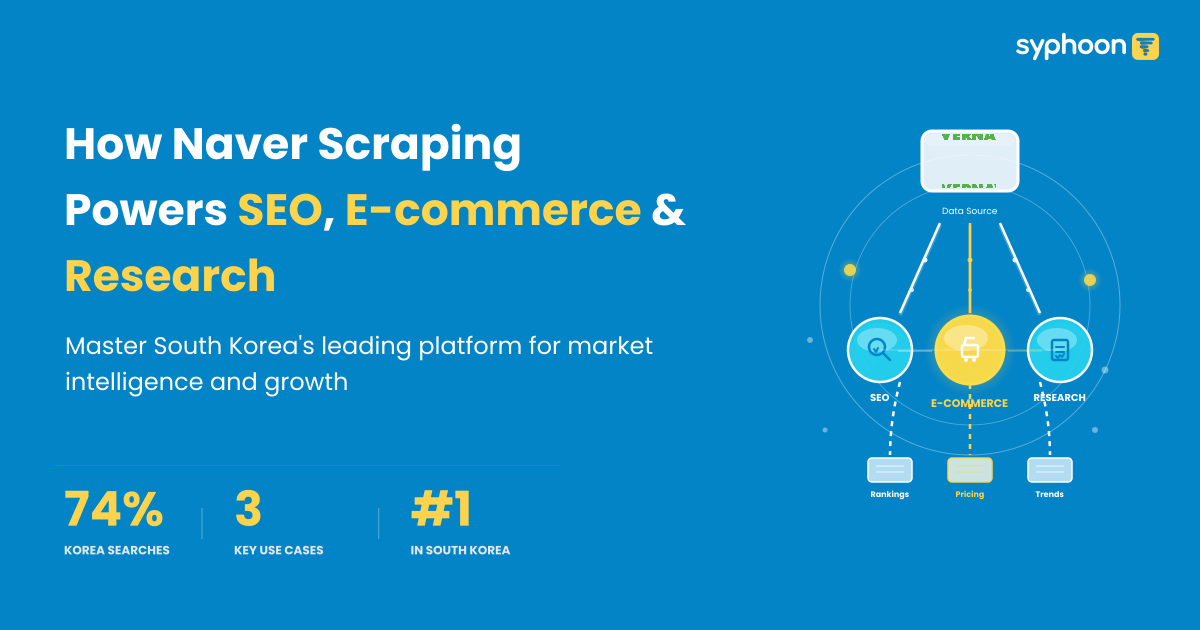
How Scraping Data from Naver.com Powers SEO, E-commerce, and Competitive Research
Naver.com is South Korea's leading search engine and online platform. It is a big part of the daily life of the people living there. Over 74% of all search queries across Korea flow through Naver. Because of this, the data that Naver produces is extremely valuable for any business looking to grow in the Korean market.
Tap into Korea's leading platform. Free to start.
100 free requests a month. No credit card required. Full access to all five Naver endpoints from day one.