Complete Guide to Web Data Extraction for Businesses
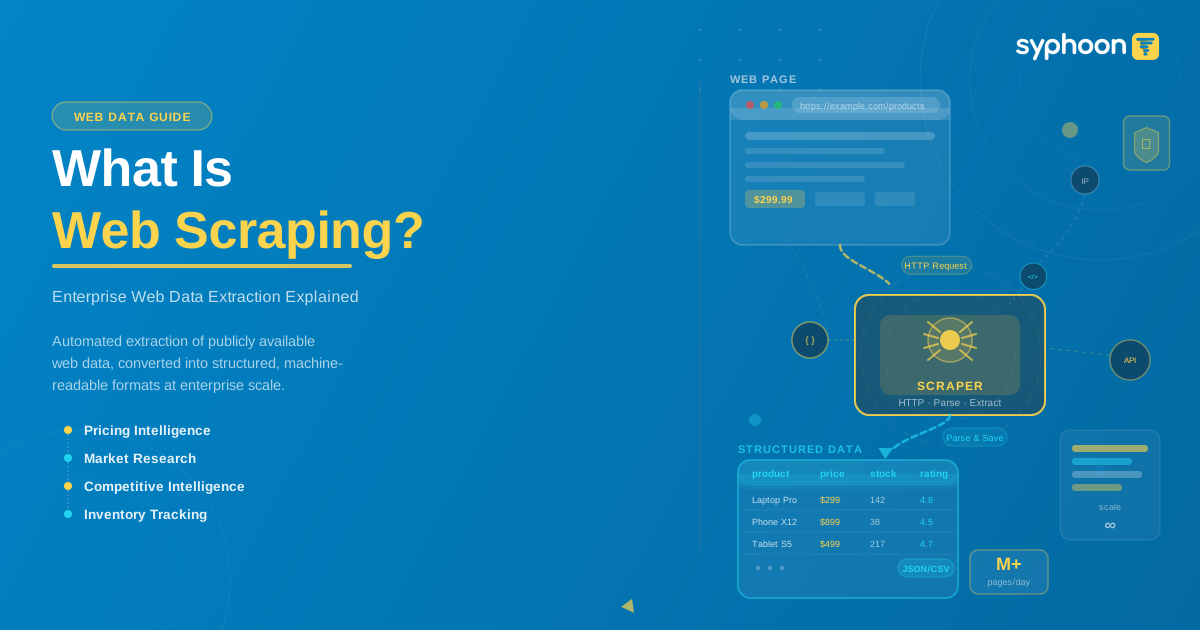
Web scraping is the automated process of extracting publicly available information from websites and converting it into structured, machine-readable formats.
Instead of manually copying information from web pages, organizations deploy automated systems that retrieve, parse, and structure web data at scale. The output can then be integrated into analytics platforms, pricing systems, dashboards, or operational workflows.
At its foundation, web scraping transforms unstructured web content into structured datasets that support decision-making.
How Web Scraping Works
Although the concept appears simple, the underlying process involves multiple technical stages.
First, a system sends an HTTP request to a target website, similar to how a browser loads a page. The website responds with content, typically in HTML format or through dynamically rendered scripts.
The scraper then parses this content to identify specific data points such as prices, product titles, descriptions, availability indicators, or structured metadata. Finally, the extracted information is normalized into formats such as JSON or CSV, making it suitable for storage, analysis, or integration into enterprise systems.
When deployed at scale, this process operates continuously across large volumes of pages and platforms.
Types of Data Commonly Extracted
Web scraping is used to collect a wide range of publicly available digital information across industries. Common data categories include product pricing, promotional details, inventory levels, customer reviews, real estate listings, travel fares, automotive inventory, financial market information, job postings, and business directories.
The strategic value does not come merely from collecting this information, but from structuring and operationalizing it within business systems.
Why Organizations Use Web Scraping
Web data plays a central role in modern competitive strategy.
Pricing intelligence allows companies to monitor competitor pricing, discounts, and promotional strategies in real time. Market research teams rely on web data to track new product launches, category shifts, and industry trends. Digital shelf monitoring enables brands to measure product visibility across marketplaces. Inventory tracking provides insight into stock fluctuations and regional availability. Lead generation initiatives use publicly available directories and listings to build structured prospect datasets.
In each case, web scraping provides visibility that would otherwise require extensive manual effort or remain inaccessible.
Turn Public Web Data Into Actionable Business Intelligence
Web Scraping vs Web Crawling
The terms “web scraping” and “web crawling” are often used interchangeably, but they describe different processes.
Web crawling refers to the automated discovery and indexing of web pages across the internet. It focuses on identifying and mapping content.
Web scraping, by contrast, focuses on extracting specific structured information from those pages once identified.
Crawling discovers. Scraping extracts.
Technical Challenges in Modern Web Scraping
While web scraping is conceptually straightforward, modern websites introduce significant complexity.
Many platforms implement protective measures to limit automated access. These may include IP-based restrictions, rate limiting, CAPTCHA challenges, and behavioral bot detection systems. Additionally, a growing number of websites rely on JavaScript to dynamically render content, requiring rendering environments capable of executing client-side scripts.
Page structures also evolve frequently, which can disrupt poorly maintained extraction systems.
At a small scale, these challenges may be manageable with simple scripts. At enterprise scale, they require resilient infrastructure, monitoring systems, and adaptive parsing strategies.
Struggling with Bot Protection and Dynamic Websites?
Is Web Scraping Legal?
The legality of web scraping depends on several contextual factors.
Scraping publicly available information is widely practiced across industries. However, accessing private, restricted, or authenticated content without authorization raises legal and ethical concerns. Website terms of service may impose limitations, and data protection regulations must be considered where personal information is involved.
Organizations implementing web scraping strategies should ensure compliance with applicable laws and adopt responsible data practices.
Web Scraping at Enterprise Scale
Scraping a limited number of pages is relatively simple. Operating reliably at scale introduces architectural complexity.
Enterprise-grade web scraping typically requires distributed proxy management, IP rotation systems, rendering environments for JavaScript-heavy platforms, automated handling of protection mechanisms, structured data normalization pipelines, and continuous monitoring for failure detection.
As data volume grows, the focus shifts from writing extraction scripts to designing resilient infrastructure capable of maintaining consistent data flow across protected environments.
In this context, web scraping becomes a data engineering and infrastructure discipline rather than a coding exercise.
Platforms such as Syphoon are built specifically to address these infrastructure challenges, enabling organizations to operate large-scale web data extraction systems without maintaining distributed proxy networks, rendering environments, and monitoring layers internally.
Web Scraping and APIs
Some websites provide official APIs that expose structured data. APIs can offer stability and documented access methods. However, APIs may limit available fields, restrict request volumes, or omit certain datasets. Additionally, not all platforms provide public APIs.
Web scraping provides flexibility in scenarios where APIs are unavailable, limited, or insufficient for business requirements.
Need More Data Than APIs Can Provide?
How Scraped Data Is Used
Once structured, scraped data supports a wide range of operational and analytical functions. It can feed pricing engines, revenue management systems, competitive intelligence dashboards, supply chain monitoring tools, and business intelligence platforms.
The transformation of web content into structured, continuously updated datasets enables organizations to operate with greater visibility and responsiveness.
Scale Your Web Data Collection with Syphoon
Don't let complex bot protections and proxy management slow down your business. Use Syphoon's enterprise-grade infrastructure to extract structured web data at any scale.
Web Scraping in Modern Data Strategy
Web scraping has evolved from a niche technical practice into a foundational component of digital intelligence strategies. In competitive digital markets, access to structured web data influences pricing decisions, product strategy, inventory management, and market positioning.
For organizations seeking to operationalize web data at scale, solutions like Syphoon provide the infrastructure layer required to move from ad-hoc scraping scripts to resilient, enterprise-grade data pipelines.
FAQs
Join Our Community
Connect with our team, discuss your use case, ask technical questions, and share feedback with a community of people working on similar problems.