
Anton Won
Head of Market Intelligence
Anton Won is Head of Market Intelligence. He works with eCommerce teams, retail brands, and data businesses on competitive pricing strategy and the infrastructure that makes real-time market intelligence possible.
Articles by Anton
Amazon Data Scraping Service for Enterprises: What to Look For
A buyer's guide to evaluating Amazon data scraping vendors for enterprise use: SLA structure, compliance, data validation, and how to run a real pilot.
How to Scrape Product Data from Walmart for Competitive Monitoring
Learn how to scrape Walmart product and search data for competitive monitoring. Real sample output covering pricing, stock, seller identity, and ratings.
How to Scrape Medicine Data from Tata1mg, Zepto and Blinkit
Compare how Tata1mg, Zepto, and Blinkit structure medicine and health-nutrition data. Real sample data, field-by-field comparison, and how to build one pipeline across all three.
Neobits Scraper: How to Extract Product Prices, Stock & Specifications
Use a Neobits scraper to collect prices, inventory & specifications in real time. Try Syphoon for fast, reliable web scraping today.

Mouser Scraper: How to Scrape Components, Pricing, and Availability Data
Mouser Scraper helps you extract components, pricing, stock availability, datasheets, and product details for faster electronics sourcing.
Zepto Scraper API: Extract Prices, Discounts, Inventory, and Product Data
Extract Zepto product prices, service fees, inventory, and information from hyperlocal zones with Syphoon's Zepto Scraper API. Monitor dark store expansion and positioning at scale.
Blinkit Scraper API: Extract Product Prices, Availability, and Grocery Data
Blinkit Scraper API helps extract Blinkit prices, product availability, and grocery data across pincodes. Track inventory at scale with Syphoon.
Walmart Product API vs Custom Scraper: Which Is Better for Data Teams?
Every data team that wants Walmart product or pricing data eventually hits the same fork: build a scraper in-house, or send requests to a dedicated API and let someone else own the collection layer. Learn what each path actually requires, where the costs really sit, and a framework for deciding which one fits your team.
Walmart Scraper API: Extract Product Data, Prices, and Availability
Walmart has grown into the second-largest ecommerce platform in the United States, and the gap with Amazon is narrowing. Syphoon's Walmart Scraper API returns structured product data from any Walmart product or search page, covering pricing, availability, seller information, ratings, and specifications.

How to Scrape Amazon Prices Without Maintaining Your Own Scraper
Maintaining a custom Amazon scraper is an ongoing engineering cost that often exceeds the value of building it. Learn why scraping Amazon prices is technically difficult, what the data looks like, and how Syphoon's Amazon API removes the maintenance burden entirely.
Amazon Price Scraper: How Brands Track Competitor Prices in Real Time
An Amazon price scraper automates competitive price tracking. It collects current prices, discounts, Buy Box status, and seller offers from Amazon product pages on a defined schedule, delivering structured data that feeds directly into pricing decisions, MAP compliance workflows, and competitive intelligence dashboards.
Naver Shopping Search Data: How to Track Product Rankings and Visibility
Learn how to collect Naver Shopping search data to monitor product rankings, keyword visibility, and competitor positioning on Korea's largest shopping platform.
Retail Competitive Price Monitoring: Track Prices Across Amazon, Walmart, Naver, and Marketplaces
Syphoon's scraper APIs, proxy infrastructure, and custom scrapers support retail competitive price monitoring across Amazon, Walmart, Naver, Shopee, Expedia, fashion retailers, electronics chains, and any retail website at scale.
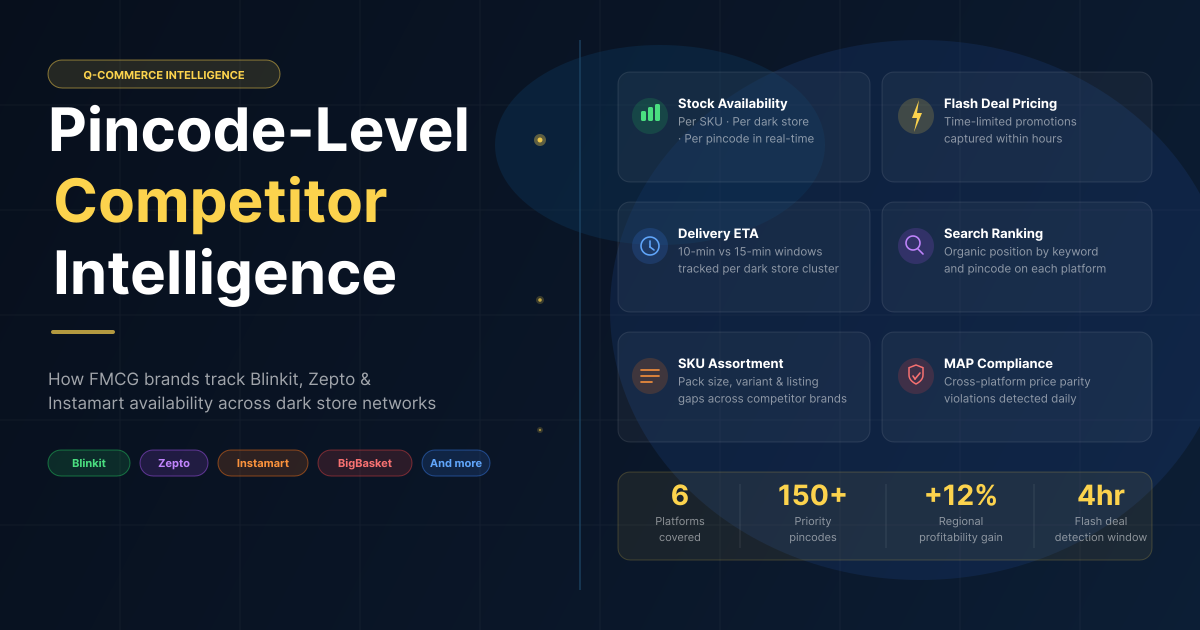
Q-Commerce Intelligence: Track Blinkit, Zepto & Instamart
How FMCG brands use pincode-level data to track competitor pricing, availability, and promotions on Blinkit, Zepto, Swiggy Instamart, BigBasket, DMart, and JioMart. Syphoon's Q-commerce API covers all six platforms.
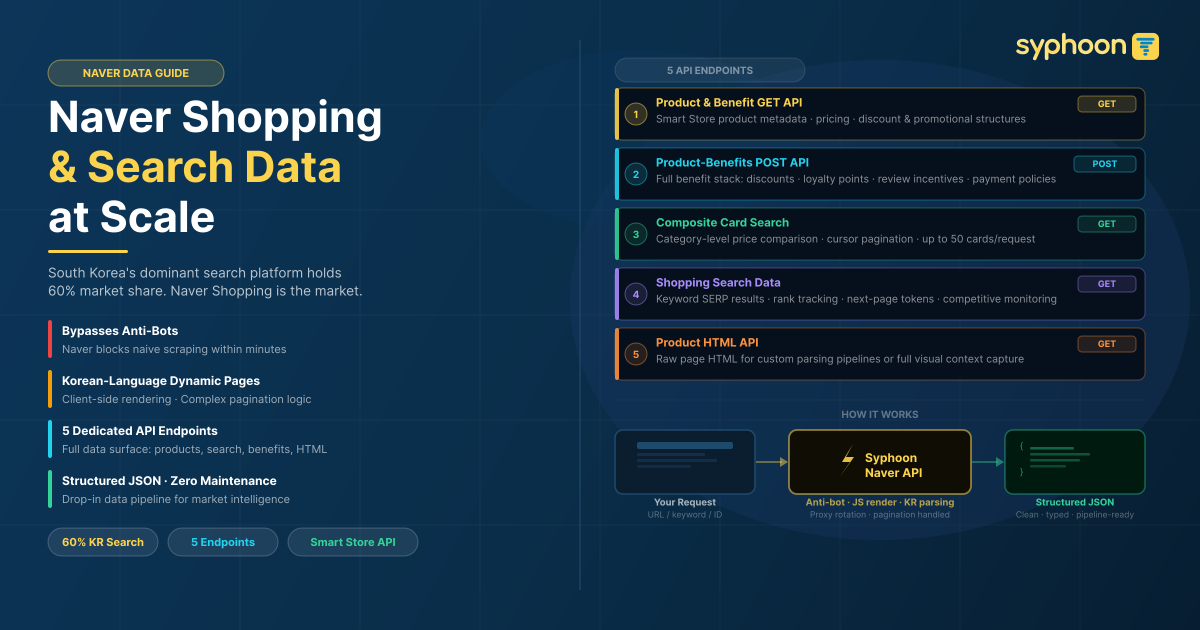
Naver Shopping and Search Data: How to Access It at Scale (2026)
A complete guide to Naver Shopping and Search data, what it covers, why it's hard to access, and how market intelligence and e-commerce teams extract it at scale using an API.

Competitor Price Monitoring: Retail Pricing Infrastructure in 2026
Retail pricing is no longer a static decision reviewed quarterly. It is a live operational variable that changes daily, sometimes hourly. In categories exposed to ecommerce and marketplaces, prices move continuously. If your pricing strategy is not supported by competitive intelligence, it is reactive by default.

Ecommerce Pricing Strategies That Actually Work in 2026
In ecommerce, pricing sets the ceiling for customer acquisition. If contribution margin per order cannot support paid traffic costs, growth stalls or turns unprofitable. Rising CPMs, higher competition, and platform fees mean pricing must absorb acquisition volatility. A product priced too low limits allowable CAC. A product priced too high suppresses demand. The correct price funds sustainable growth while preserving margin under realistic traffic cost assumptions.
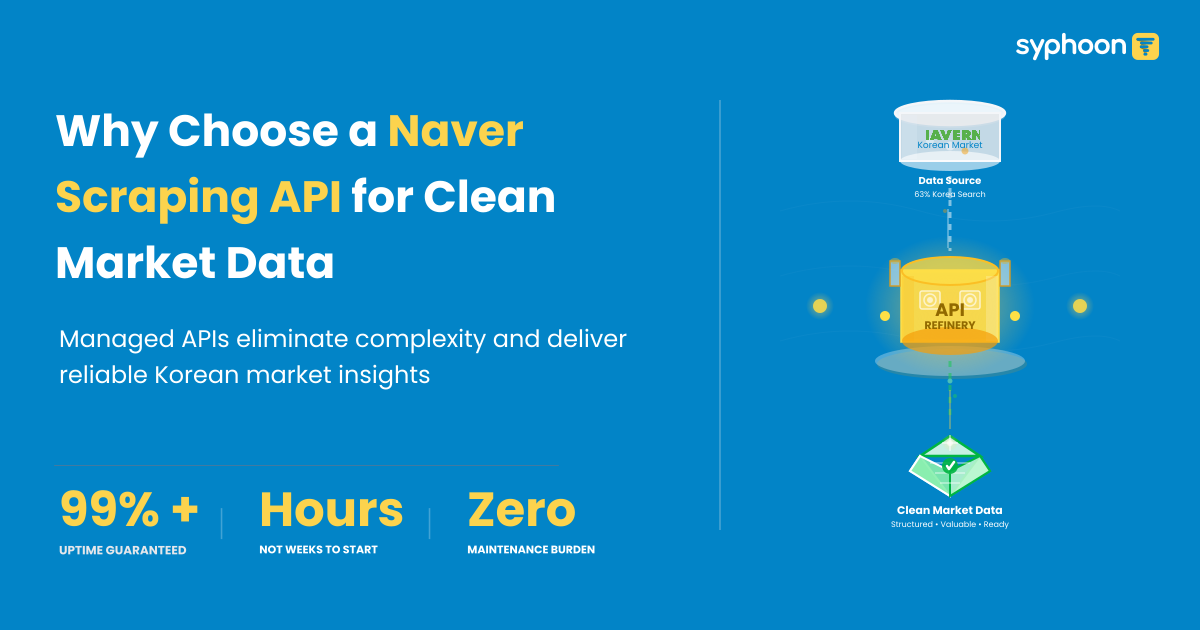
Why Choose a Naver Scraping API for Your Data Extraction Needs
If you're pulling in Korean market data, then you know how important Naver is. More than 63% of all search queries in Korea flow through Naver, making it an invaluable resource for businesses trying to understand consumers in Korea. Scraping Naver is not easy, though, because the platform has strong anti-bot protection and serves content dynamically, frustrating anyone using basic scripts.
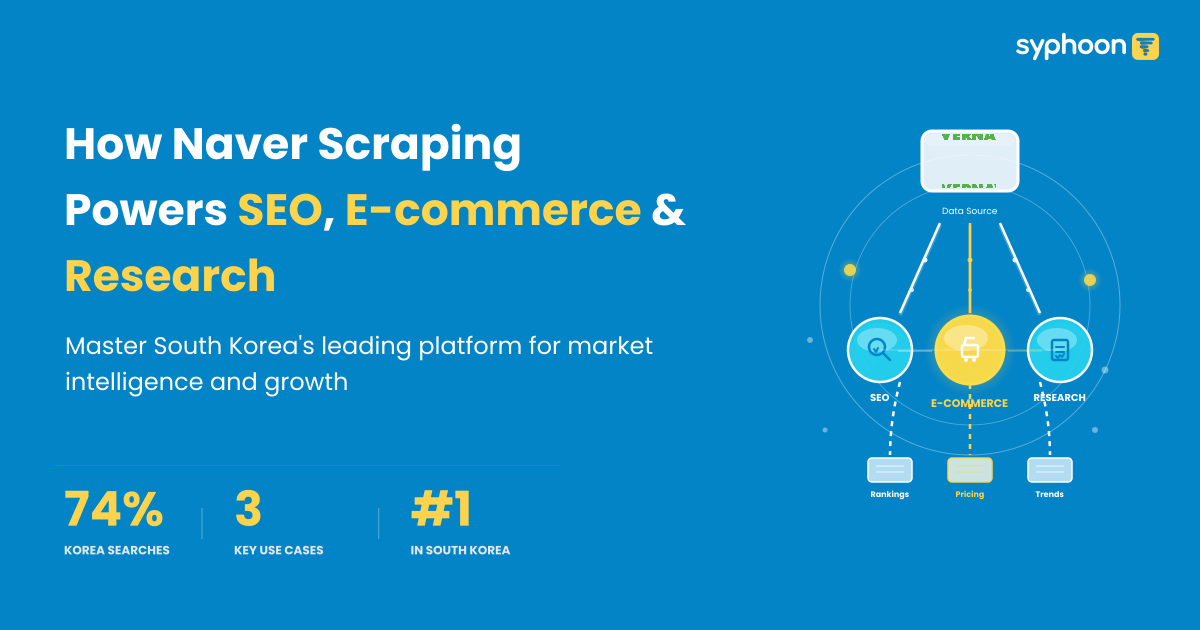
How Scraping Data from Naver.com Powers SEO, E-commerce, and Competitive Research
Naver.com is South Korea's leading search engine and online platform. It is a big part of the daily life of the people living there. Over 74% of all search queries across Korea flow through Naver. Because of this, the data that Naver produces is extremely valuable for any business looking to grow in the Korean market.