If you've ever tried to scrape data, manage multiple accounts, verify ads, or access geo-restricted content, you've probably run into the datacenter proxies vs residential proxies debate. It's one of the most common questions we get at Syphoon, and for good reason. Pick the wrong type and you're either burning money or getting blocked every five minutes.
This guide breaks down exactly what each proxy type is, how they differ, and, most importantly, which one you should use for your specific situation.
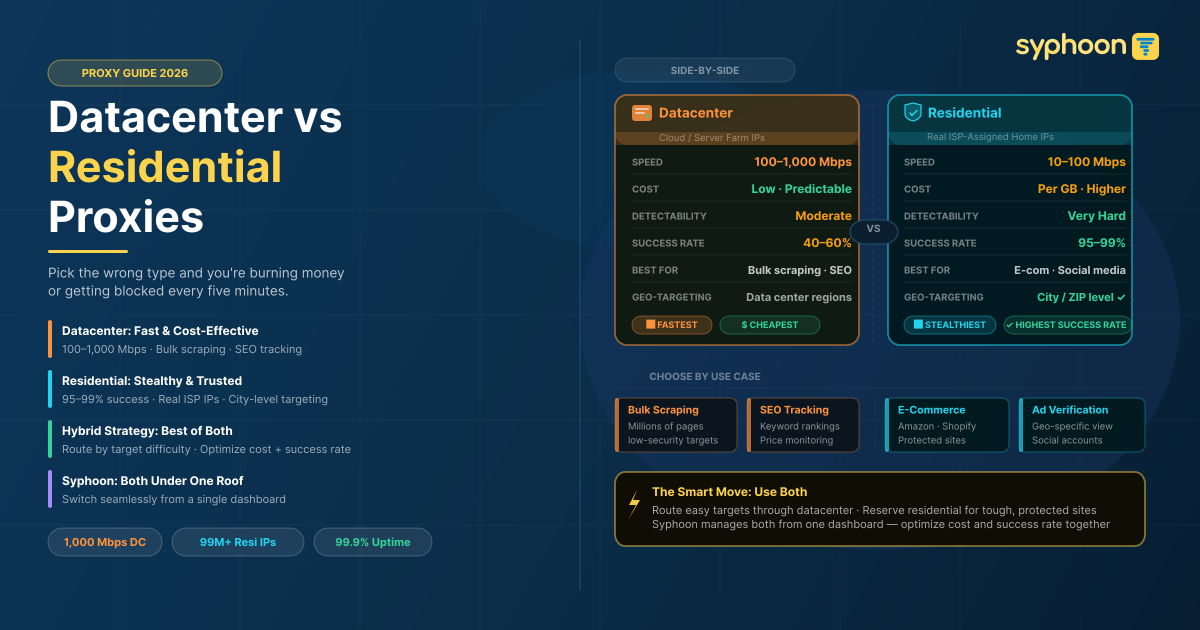
Datacenter proxies are faster and cheaper. Residential proxies are stealthier and harder to detect. The right choice depends entirely on what you're doing online.
What Are Datacenter Proxies?
Datacenter proxies are IP addresses that come from servers hosted in commercial data centers, think large cloud infrastructure providers like AWS, Google Cloud, or private server farms. They have absolutely nothing to do with your home internet or a real ISP.
When you route your traffic through a datacenter proxy, websites see an IP address tied to a data center rather than a household.
Pros
• Lightning fast. Raw speed, data centers run on enterprise-grade hardware with gigabit connections
• Cost-effective. Much cheaper per IP than residential options, making them ideal for high-volume tasks
• Great for bulk tasks. Perfect for simple scraping jobs, price monitoring, SEO tracking, or any task on low-security sites
• Easy to scale. Easily available in bulk from providers like Syphoon
Cons
• Easier to detect. Websites can detect datacenter IPs fairly easily since they're not assigned to real ISPs
• Shared subnet risk. Subnets are often shared, so one bad actor getting flagged can affect other IPs in the same range
• Higher block rates on tough targets. Lower success rates on heavily protected sites like major e-commerce or social platforms
Still unsure about the difference between data center and residential proxies?
What Are Residential Proxies?
Residential proxies use IP addresses assigned by real Internet Service Providers (ISPs) to real people's homes and devices. When you browse through a residential proxy, websites see a request coming from what looks like an ordinary person, because, in a sense, it is.
These IPs are sourced through peer-to-peer networks, where real users opt in to share their bandwidth (ethically and with proper consent, as Syphoon ensures). This makes residential proxies incredibly hard to detect.
Pros
• Extremely stealthy. Look like genuine human traffic, because they're tied to real ISP-registered devices
• Accurate geo-targeting. Legitimate geo-targeting down to city and zip code level, perfect for ad verification
• High success rates. Achieve 95–99% success rates on heavily protected sites like Amazon, social platforms, and travel aggregators
• Account management. Ideal for managing multiple accounts, where each IP needs to look like a distinct real user
The Not-So-Good Stuff
• More expensive. Priced per GB of traffic, which adds up quickly on large-scale operations
• Slower speeds. Slower than datacenter proxies due to residential connection speeds and routing
• Less consistent. Performance can vary depending on the home network being used
Datacenter vs Residential Proxies: Side-by-Side
| Factor | Datacenter Proxies | Residential Proxies |
|---|---|---|
| IP Source | Server farms / cloud providers | Real ISP-assigned home IPs |
| Speed | 100–1,000 Mbps (very fast) | 10–100 Mbps (moderate) |
| Detectability | Easier to detect | Very hard to detect |
| Success Rate | 40–60% | 95–99% |
| Geo-targeting | Limited (data center locations) | Precise (city/zip level) |
| Best For | Bulk scraping, SEO, low-security | E-commerce, social media, ads |
Comparing datacenter proxies vs residential for your use case?
Which One Should You Choose?
Choose Datacenter Proxies When...
• You need to scrape millions of pages quickly from sites without heavy bot protection
• Budget is your primary concern and you need a predictable monthly cost
• You're tracking SEO rankings, monitoring prices, or running market research on standard sites
• Speed matters more than stealth for your use case
Choose Residential Proxies When...
• You're scraping e-commerce giants, travel sites, or social media platforms
• You need to appear as a real user from a specific city or country
• You're managing multiple social media accounts and need each to look distinct
• You're verifying ads or testing geo-restricted content
• You keep getting blocked with datacenter IPs
Use Both (The Smart Move)
Many seasoned scraping professionals, and what Syphoon recommends for most businesses, is a hybrid approach. Route easy, high-volume requests through datacenter proxies to save money, and reserve residential proxies for the tough targets where success rates actually matter. This way you optimize for both cost and performance.
Syphoon offers both datacenter and residential proxies under one roof, so you can switch seamlessly and build smarter proxy strategies without juggling multiple providers.
Need a hybrid strategy using data center proxies vs residential proxies?
Real-World Use Cases
Web Scraping & Data Collection
For scraping public government sites, basic product databases, or simple HTTP pages, datacenter proxies are your friend. They're fast, cheap, and get the job done. For scraping Amazon, Shopify stores, Airbnb, or any platform with serious anti-bot defenses, go residential.
Ad Verification
Ad verification is all about seeing what real users see in a real location. Residential proxies shine here because they provide an authentic local footprint that datacenter IPs simply can't replicate. You need your tool to look like a real person in Chicago, not a server in a Virginia data center.
Social Media Management
Managing multiple accounts across Instagram, TikTok, or Twitter? Each account needs its own unique, believable IP. Residential proxies are the only safe option here; platforms have become incredibly sophisticated at flagging non-residential IPs used for account management.
Price Monitoring & Competitive Intelligence
For monitoring prices across hundreds of thousands of products daily, datacenter proxies are typically sufficient and far more cost-effective. Unless you're targeting a highly protected retailer, the speed advantage makes datacenter the smarter choice here.
SEO Rank Tracking
Checking keyword rankings across different regions? Both proxy types for web scraping work, but datacenter proxies are commonly used due to their speed and volume capacity. For highly localized rank tracking, residential proxies give more accurate results.
Ready to choose between datacenter proxies vs residential proxies?
Scale Your Web Data Collection with Syphoon
Don't let complex bot protections and proxy management slow down your business. Use Syphoon's enterprise-grade infrastructure to extract structured web data at any scale.
FAQs
Join Our Community
Connect with our team, discuss your use case, ask technical questions, and share feedback with a community of people working on similar problems.