
Daniel G
Head of Proxy & Data Infrastructure
Daniel G is Head of Proxy & Data Infrastructure. He leads the architecture and operations of residential proxy networks, scraping APIs, and market intelligence infrastructure used by engineering teams worldwide.
Articles by Daniel

Best Expedia Scraper APIs in 2026: 6 Options Compared
A field-by-field, pricing-model comparison of six ways to pull Expedia hotel data. What each one actually returns, how it's billed, and where each one breaks.

Expedia Scraper API: Why GraphQL Beats HTML Parsing for Hotel Data
Expedia's own site runs on GraphQL, not rendered HTML. Learn why reading that data layer directly beats CSS-selector scraping, and see real hotel data output.
Best NetNut Alternatives for Residential and Mobile Proxies in 2026
Compare the best NetNut alternatives for residential and mobile proxies in 2026, including IP pool size and geo-targeting, with Syphoon, Bright Data, Oxylabs, Decodo, and IPRoyal.
How to Scrape Amazon ASIN Data for Marketplace Intelligence
Every product on Amazon has an ASIN: a ten-character identifier that is the key to everything useful about that listing. Learn how to collect ASIN data at scale, reliably, without building and maintaining infrastructure that fights Amazon's bot detection every day.
Apify Instagram Alternative: Why Teams Switch to Syphoon
Apify Instagram scrapers are built by individual marketplace developers with separate actors per data type, shared proxies, and maintenance dependent on third-party developers. Syphoon offers a single dedicated Instagram API covering all data types through one endpoint.
Amazon ASIN Batch Scraping: Discovery, Enrichment, and Location-Aware Data at Scale
Amazon changes prices 2.5 million times per day. Syphoon's Amazon ASIN batch scraping API handles discovery and enrichment workflows with ZIP code-level targeting and structured JSON output.
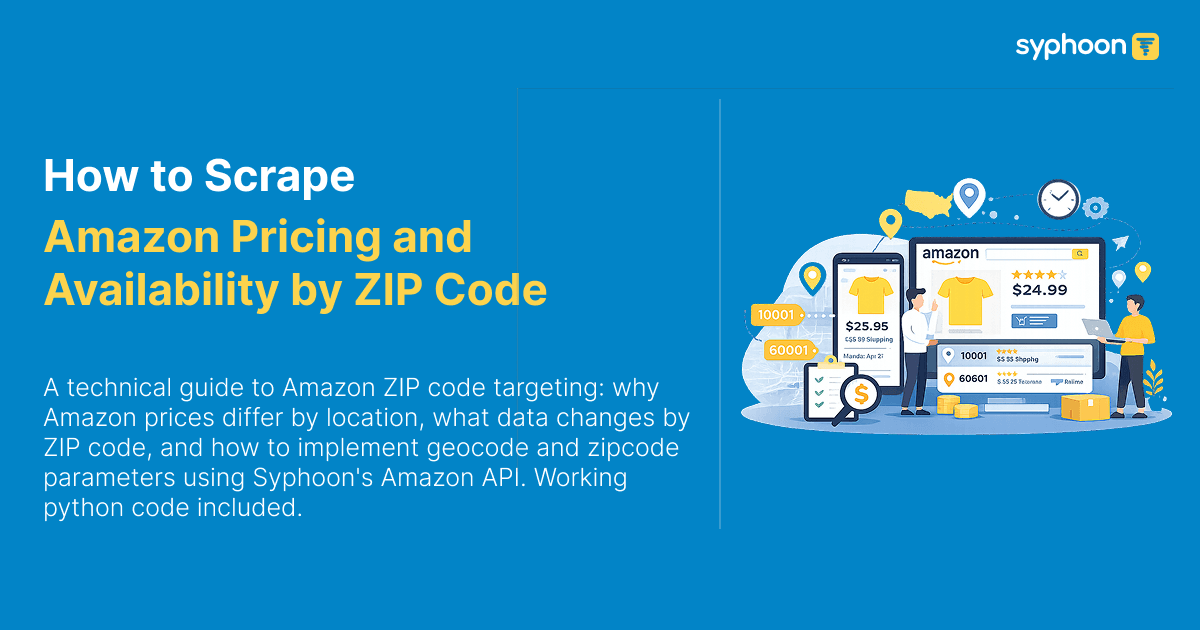
How to Scrape Amazon Pricing and Availability by ZIP Code
A technical guide to Amazon ZIP code targeting: why Amazon prices differ by location, what data changes by ZIP code, and how to implement geocode and zipcode parameters using Syphoon's Amazon API. Includes working Python code.
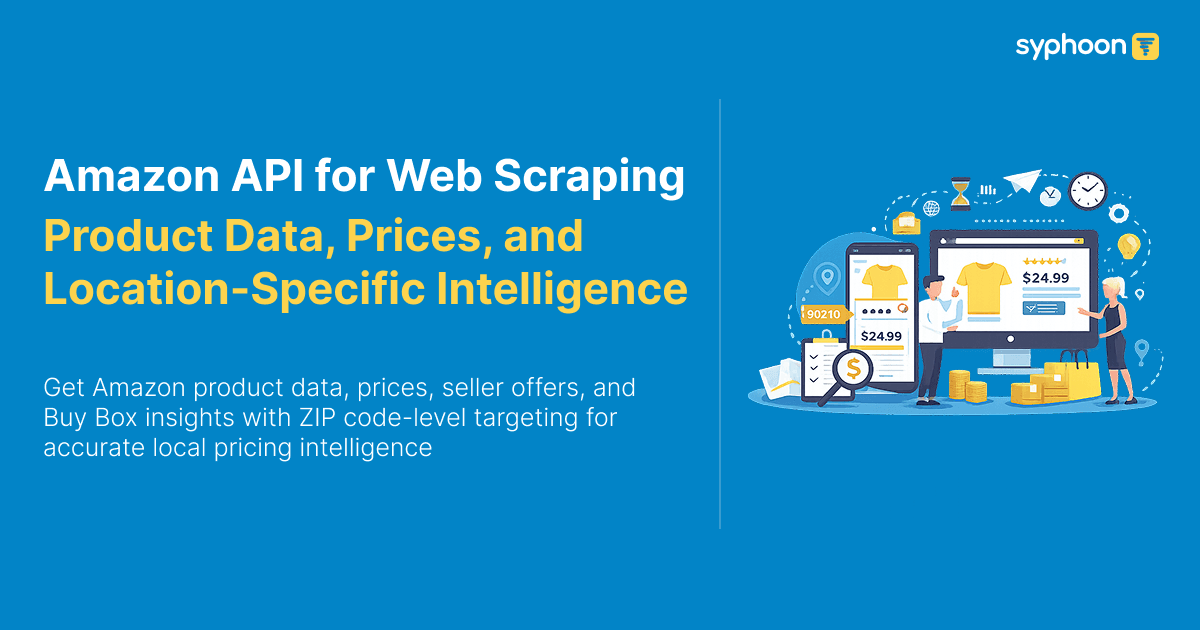
Amazon API for Web Scraping: Product Data, Prices, and Location-Specific Intelligence
Get Amazon product data, prices, seller offers, and Buy Box insights with ZIP code-level targeting for accurate local pricing intelligence
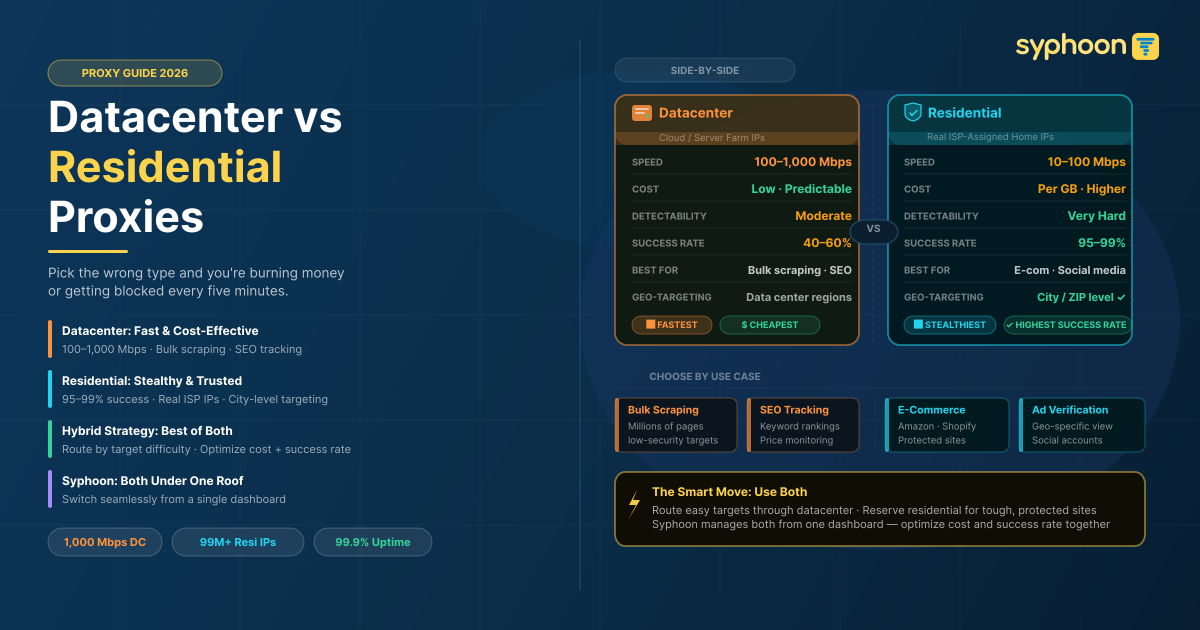
Datacenter Proxies vs Residential Proxies: Everything You Need to Know in 2026
If you've ever tried to scrape data, manage multiple accounts, verify ads, or access geo-restricted content, you've probably run into the datacenter proxies vs residential proxies debate. This guide breaks down exactly what each proxy type is and which one you should use.
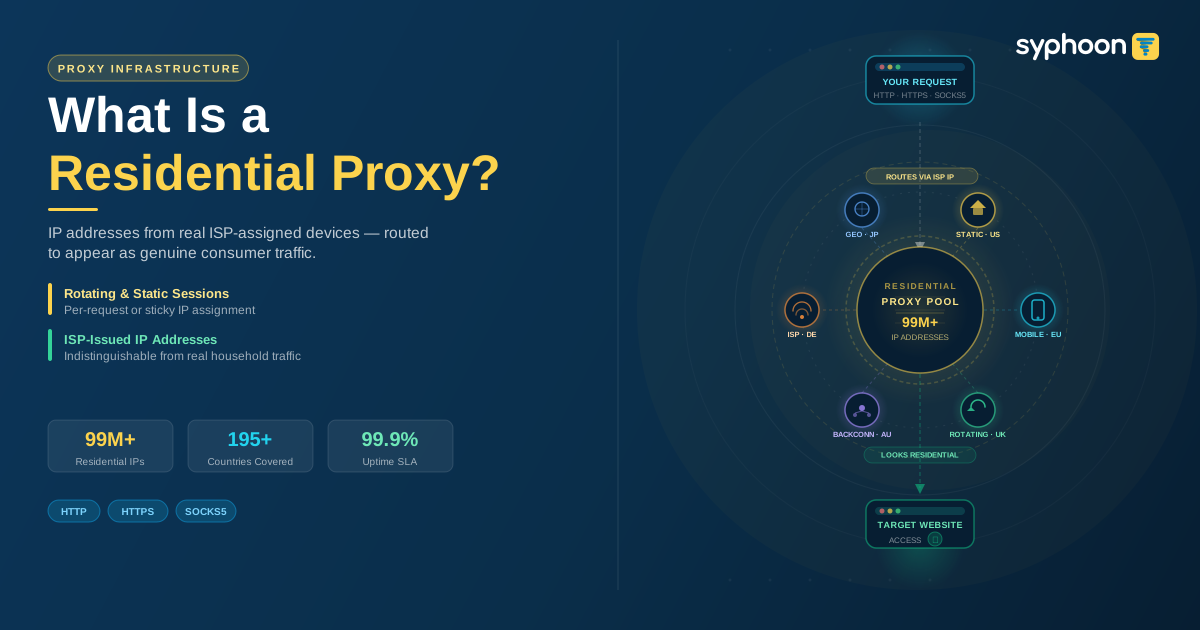
What is a Residential Proxy? The Ultimate Guide for 2026
A complete guide to residential proxies: how they work, use cases, and how they compare to datacenter proxies.
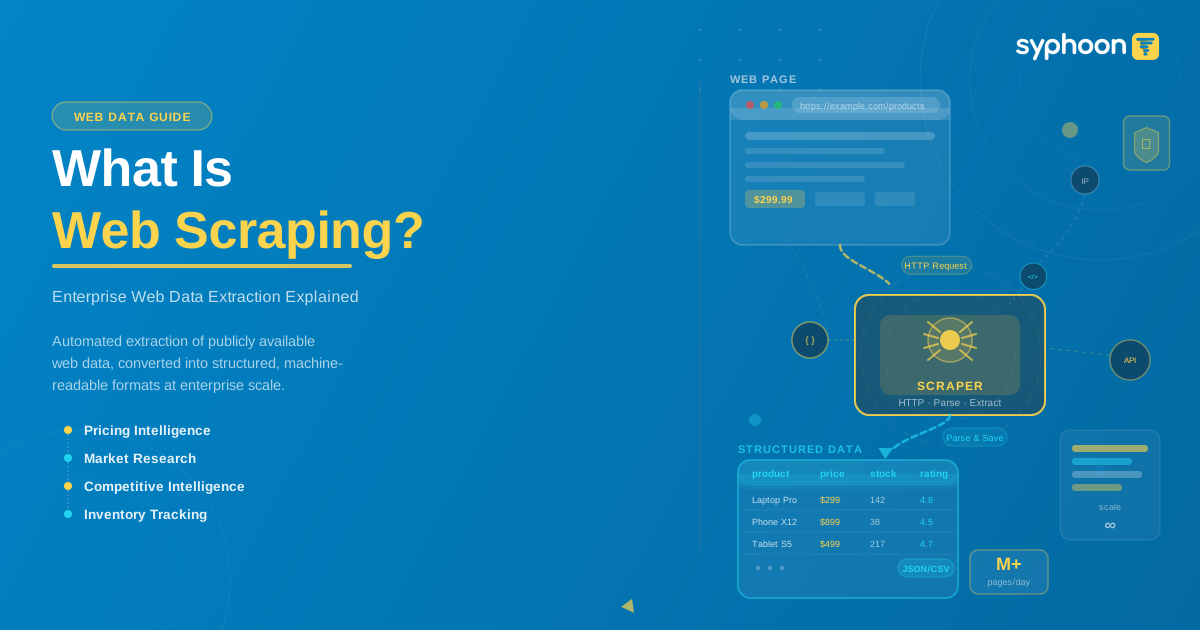
What Is Web Scraping?
Understand web scraping, technical challenges, legal factors, and how enterprise-grade infrastructure enables reliable web data extraction at scale. Web scraping transforms unstructured web content into structured datasets.
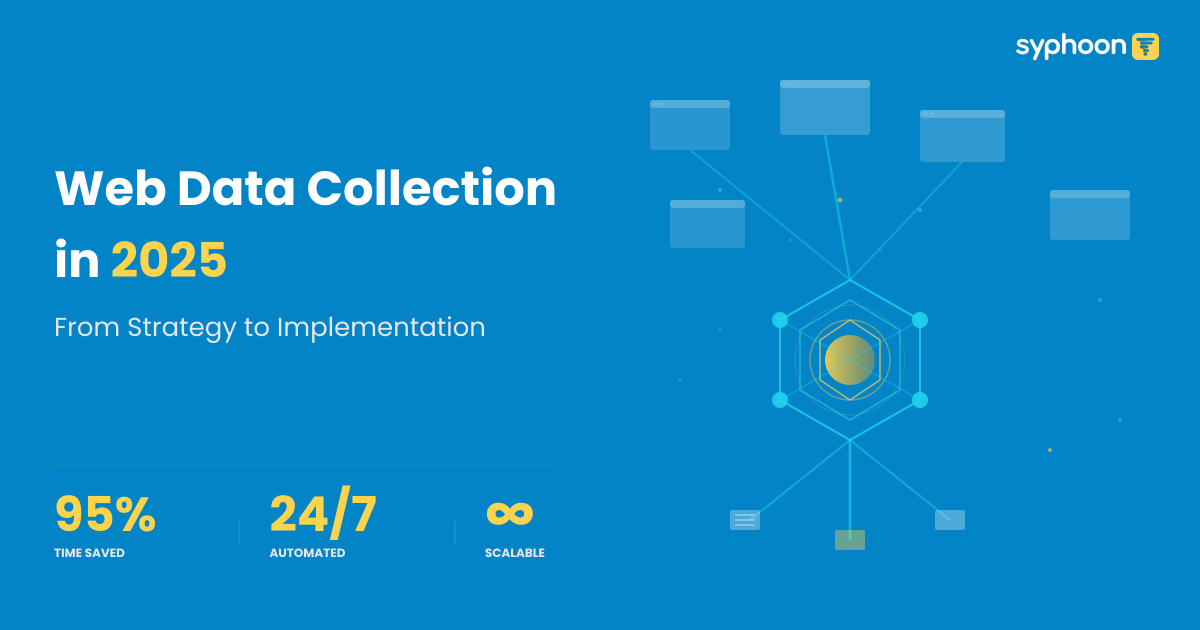
Web Data Collection in 2025: From Strategy to Implementation
In today’s data-driven world, banking, financial services, retail, and technology companies increasingly rely on web data to guide strategic decisions. While many organizations understand the value of data, collecting it at scale remains a persistent challenge.

Inside Anti-Bot Systems: Why Scrapers Fail & What Works
In controlled testing of automated data collection systems, a familiar pattern emerges. For roughly the first 40-50 requests, automated traffic often appears legitimate without issues.

Most Scraped Websites of 2025: The Platforms Powering the AI Revolution
The web scraping landscape in 2025 looks nothing like what most people expect. While you might assume Google and Amazon dominate data collection, the reality is more nuanced.